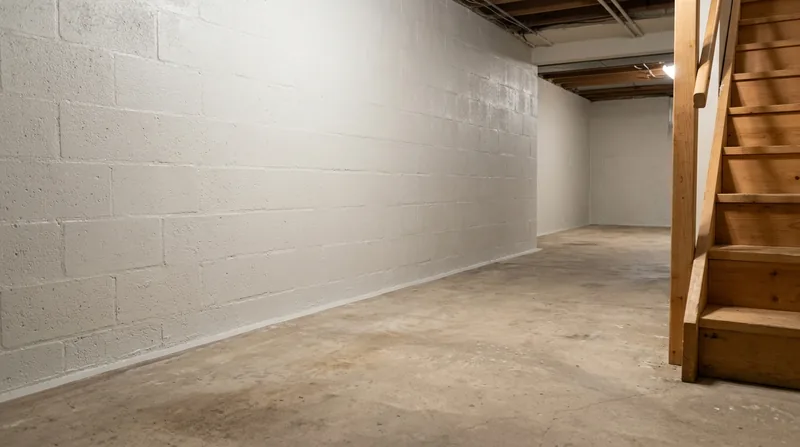




Scranton sits in a narrow valley where glacial till and shale meet old anthracite mine workings, and that geology shows up in basements from the Hill Section to the West Side. Fieldstone foundations under 1890s double-blocks, brick Victorian walls in Green Ridge, and poured concrete in the Abingtons all take water differently, and guessing wrong costs money. A Free Basement Inspection in Scranton puts a trained eye on your walls, floor, sump basin, and grading before you spend a dollar on repairs. We walk the basement room by room, photograph what we find, and tell you plainly what needs fixing now, what can wait, and when nothing is wrong at all. This is diagnostic work, not a sales pitch, and it is the same starting point we use before any basement waterproofing recommendation. Call (272) 770-2393 to schedule.
Why a Free Basement Inspection Matters in the Lackawanna Valley
The failure mode that dominates Scranton is not one big leak, it is slow hydrostatic pressure against old foundations after snowmelt and heavy spring rain. Water tables rise fast in the valley floor neighborhoods, and the shale and glacial clay soil holds water against your walls instead of draining it away. Add freeze-thaw cycles that open hairline cracks a little wider every winter, and you get the pattern we see all over South Side and North Scranton.
- Old fieldstone and brick foundations in the Hill Section and Green Ridge seep at mortar joints that have been wet for decades.
- Frame double-blocks on the West Side often have no working footing drain left, so water finds the path of least resistance.
- 1950s to 1970s block basements in Clarks Summit and South Abington crack at the block courses when the ground heaves.
- Newer poured walls in Moscow and the Abingtons show efflorescence when grading and downspouts push water back to the foundation.
An inspection separates a cosmetic damp spot from a real water problem before either one gets expensive.
Key info: After Tropical Storm Lee in 2011, basements across South Side and the river bottoms in Dickson City took on water in hours. If your home flooded then, or in 2006, the inspection starts with the drain tile and sump system, not the walls.
For the official word on what work needs a permit in the city, check the City of Scranton building department before any structural repair is scheduled.
How Our Scranton Basement Inspection Works, Step by Step
We inspect in the order water actually travels, from the outside in, so the report tells a story instead of a list of symptoms. The walkthrough takes about an hour on a typical Scranton home and longer on a large Victorian with multiple basement rooms. You get photos of every finding and a written explanation in plain language.
- We start outside with grading, downspout extensions, and window wells, because most wall seepage starts with roof water dumped at the foundation.
- We check the foundation walls for cracks, bowing, and efflorescence, and we note whether each crack is active or old.
- We inspect the floor, cove joint, and any visible drain tile or weeping tile runs for silt and collapse.
- We test the sump pump, check valve, and discharge line, and look at whether the basin fills faster than the pump clears it.
- We check the vapor barrier and look for moisture patterns that point to condensation rather than groundwater.
- We write up what needs fixing now, what can wait, and what is fine, with a straight answer if nothing is wrong.
If the inspection points to a drainage fix, we explain the difference between interior and exterior options before you commit to either.
Key info: On a 1920s home in Green Ridge, the owner was ready to excavate. The inspection found a cracked clay tile footing drain and a discharge line that dumped water two feet from the wall. A drain tile repair and a proper discharge extension solved it for a fraction of the excavation cost.
Inspection Approaches and What Each One Tells You
The inspection method depends on the age of the house and what the symptoms suggest. We choose the approach that answers the question without unnecessary work.
| Approach | Description | Best for |
|---|---|---|
| Visual perimeter walk | Room-by-room check of walls, floor, cove joint, and penetrations with photo documentation | First-time buyers and any home with no known water history |
| Moisture meter survey | Readings on walls, framing, and floor to separate active moisture from old staining | Homes with efflorescence or a musty smell but no visible water |
| Sump and drainage test | Pump cycle test, check valve inspection, and basin refill rate measurement | Any home with a sump basin, especially after a pump failure |
| Crack and wall assessment | Crack width and movement check, bowing measurement, and mortar joint review | Fieldstone, brick, and block foundations in older Scranton neighborhoods |
| Grading and downspout review | Slope check, gutter discharge location, and window well condition | Homes with damp walls but no clear crack or drain failure |
Each approach is a tool, and the report combines them into one clear picture of your basement.
Free Basement Inspection Cost in Scranton: What to Expect
The inspection itself costs nothing, and that is the point. We use it to find out whether you need a $400 crack injection, a $6,000 interior drain tile system, or nothing at all. The number that matters comes after the walkthrough, not before it. For a full picture of repair pricing in the area, see our pricing overview.
When we quote repairs, several factors move the price. The size and age of the foundation matters most, because a fieldstone wall in Old Forge takes more prep than a poured wall in South Abington. Access to the basement and the exterior wall affects labor. The number of active cracks, the condition of the existing drain tile, and whether the sump discharge needs rerouting all change the scope. So does urgency after a storm.
Get two or three estimates on any waterproofing work, and make sure each one is based on an actual inspection rather than a phone description. A contractor who quotes a full system without looking at your sump basin has not done the job.
Free Basement Inspection Near Me: How to Choose a Scranton Contractor
Waterproofing is a below-grade trade, and it is not the same as general foundation repair or plumbing. Ask whether the company is licensed and insured, and ask for the certificate rather than taking a verbal yes. Get multiple estimates in writing, with the scope spelled out, and check local references on homes built in the same era as yours.
Confirm who pulls permits for any structural repair, egress window cut, or change to how the sump discharge connects to the sanitary line. Rules vary by jurisdiction, so verify with the local building department before work starts. If your neighborhood has association rules about exterior work, check those too. And ask how the company handles a transferable warranty, in writing.
We are a Basement Health Association member and a dedicated basement waterproofing specialist. Reach out through our contact page or call (272) 770-2393, and we will schedule the inspection and show up when we say we will.
Free Basement Inspection in Scranton: Pricing Guide
| Service | Price | Details |
|---|---|---|
| Free basement inspection | Free | Room-by-room walkthrough, photos, and written findings with no obligation to book repairs |
| Crack injection (epoxy or polyurethane) | Starting at $450 | Per crack, priced by length and wall thickness; includes port setup and cleanup |
| Interior drain tile system | Starting at $4,500 | Perimeter drain, sump basin, and pump; price moves with basement square footage and access |
| Sump pump replacement | Starting at $650 | Pump, check valve, and discharge tie-in; battery backup adds to the total |
| Exterior waterproofing excavation | On estimate | Membrane, dimple board, and footing drain; needs an on-site look at depth and access |
| Estimate and scheduling | Free | Response within 24 hours at (272) 770-2393, no obligation to book |
Indicative pricing, the exact cost depends on square footage, finish, and site access. Free personalized estimate within 24h at (272) 770-2393.


