



Basement Waterproofing in Scranton: Built for the Lackawanna Valley Water Path
Scranton sits in a narrow river valley between steep wooded ridges, and that geography writes the rules for every wet basement here. Snowmelt and summer storm runoff pour off the ridges into glacial till and shale, and much of the valley still sits over old anthracite mine workings that settle and crack foundations over time. Basement Waterproofing in Scranton has to answer that reality, not a generic checklist. From the fieldstone and brick foundations of the Hill Section and Green Ridge to the block basements of 1950s ranches in Clarks Summit, we trace where the water actually enters before we quote a system. Call (272) 770-2393 for a free inspection and a straight answer on what your basement needs. Start with our free basement inspection and we will show you the water path.
Why Basements in Scranton Take on Water the Way They Do
Three forces line up against Scranton basements. The first is hydrostatic pressure: saturated glacial clay soil pushes water against foundation walls until it finds the weakest joint, crack, or mortar line. The second is the old building stock itself, with 1870s to 1920s fieldstone and brick foundations in the Hill Section and Green Ridge that were never designed for modern drainage. The third is the river and creek bottoms near the Lackawanna, where the water table rises fast during spring snowmelt and after the kind of storms that flooded the valley in 2006 and again during Tropical Storm Lee in 2011.
- Old stone foundations in the West Side and South Side double-blocks seep through mortar joints that have softened over a century of freeze-thaw cycles.
- Homes over abandoned mine workings in Dunmore, Old Forge, and Taylor can develop settlement cracks that let water in at the wall-footing seam.
- 1950s to 1970s block basements in Clarks Summit and South Abington often have failing original drain tile that clogs with clay and silt.
- Newer poured-concrete basements in the Abingtons and Moscow still take water when grading and downspout extensions are wrong.
Each of those failure modes calls for a different repair, and guessing wrong is how homeowners pay twice for the same wet basement.
Key info: A Green Ridge homeowner called us after every heavy rain left two inches of water along the front wall. The mortar joints were open and the downspouts dumped at the foundation. Sealing the joints and extending the downspouts solved it. A house three blocks over with the same symptom needed an interior perimeter drain because the water was coming up through the floor, not through the wall.
Permits for structural foundation repair and for work that alters drainage or the sanitary connection of a sump discharge are handled through the City of Scranton's building department, and rules vary by jurisdiction, so always verify the current requirements before work begins. You can check the city's official resources at scrantonpa.gov.
How We Waterproof a Scranton Basement, Step by Step
We do not sell a system before we know where the water comes from. Our process starts with a full basement inspection: we read the walls for efflorescence and horizontal cracking, check the floor-wall seam, test the existing drain tile and sump basin, and look at grading and downspout discharge outside. Then we recommend the approach that matches the actual water path, whether that is crack injection, wall sealing, an interior drain tile system, or exterior excavation when the problem is truly on the outside.
- We inspect the basement, the foundation exterior, and the grading, and we document what we find with photos.
- We identify the water source: wall seepage, floor seepage, a failed sump pump, or hydrostatic pressure from saturated clay.
- We recommend the right method and explain plainly when simple crack sealing is enough and when an interior drain is the better answer than digging out the exterior.
- We install the system, test it with water, and walk you through the sump pump, check valve, and discharge line before we leave.
- We verify the discharge exits well away from the foundation so the water does not come straight back.
Every job ends with a tested system and a homeowner who understands how it works.
Key info: On a 1920s double-block in South Side, the original weeping tile had collapsed under the footing. We installed an interior drain tile system with a new sump basin and a battery backup, and the basement stayed dry through the next spring snowmelt.
Waterproofing Methods We Use and When Each One Fits
There is no single waterproofing method that fits every Scranton basement. The table below shows the approaches we install most often and the conditions each one is built for. We choose based on the water source, the foundation type, and how the house sits on the lot.
| Approach | Description | Best for |
|---|---|---|
| Interior perimeter drain | A drain tile system cut along the floor-wall seam that collects water and routes it to a sump basin. | Hydrostatic pressure and floor seepage in stone and block basements. |
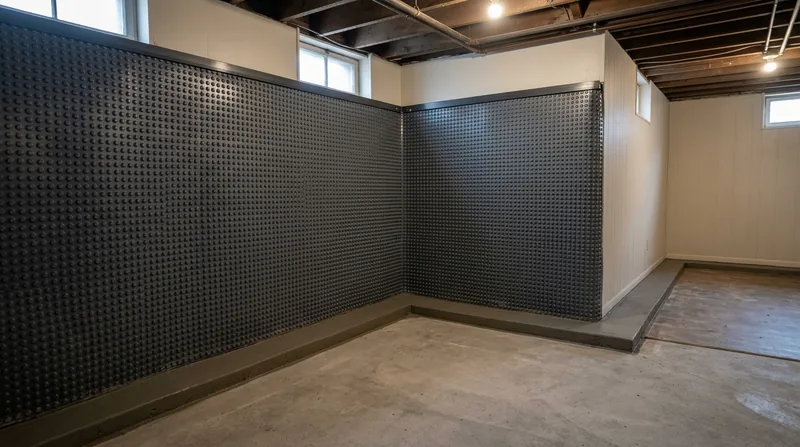
| Exterior waterproofing | Excavation, parging, waterproof membrane, and dimple board applied to the outside of the wall. | Walls that are bowing or heavily deteriorated and need outside correction. |
| Crack injection | Epoxy or polyurethane injected through ports to seal a specific foundation crack. | Isolated vertical cracks with no widespread pressure problem. |
| Wall sealing and vapor barrier | Sealing the wall surface and installing a vapor barrier to control moisture. | Damp walls, efflorescence, and musty basement smell without standing water. |
| Sump pump and discharge | New or replacement sump pump, check valve, and discharge line routed away from the house. | Failed pumps and basements that need reliable water removal. |
If your walls are moving, not just leaking, we bring in bowing wall repair with carbon fiber straps or wall anchors before any waterproofing goes on.
Basement Waterproofing Cost in Scranton: What to Expect
Most Scranton basement waterproofing projects start around $2,500, and that figure covers straightforward work such as sealing a wall, injecting a single crack, or correcting grading and downspouts. A full interior perimeter drain with a new sump basin runs higher, and exterior excavation is the most involved option because it means digging out the foundation and restoring the site. The number moves with the foundation type, the length of wall involved, the depth of the water table, and access to the basement.
Old fieldstone foundations in the Hill Section take more labor than a poured wall in South Abington because every joint is different. Homes near the Lackawanna with a high water table may need a larger sump basin and a battery backup. Getting two or three estimates is smart, and it is the only way to compare what each contractor actually proposes to install. Our full pricing overview breaks down the ranges by method.
Choosing a Basement Waterproofing Contractor Near Me in Scranton
Hiring the right contractor matters more than the brand of sump pump. Ask for proof of licensing and insurance, get at least two or three written estimates that specify the method and materials, and ask for references from jobs in your part of the valley. A contractor who has worked in Green Ridge and the West Side will recognize a fieldstone foundation problem on sight. Permits for structural repair or drainage changes go through the local building department, and rules vary, so confirm who pulls the permit before work starts.
- Confirm the contractor carries liability insurance and workers' compensation, and ask for a certificate.
- Get the estimate in writing with the method, materials, and warranty terms spelled out.
- Ask for references from Scranton, Dunmore, or Clarks Summit jobs similar to yours.
- Verify permit requirements with the City of Scranton building department before signing.
We are a Basement Health Association (BHA) member and we put our transferable warranty in writing. Reach out through our contact page to schedule your free inspection.
Basement Waterproofing in Scranton: Pricing Guide
| Service | Price | Details |
|---|---|---|
| Crack injection and wall sealing | Starting at $2,500 | Covers epoxy or polyurethane injection for isolated cracks or sealing damp walls, with price rising by crack length and wall access. |
| Interior drain tile system | Starting at $4,500 | Includes perimeter drain, sump basin, and pump, with cost driven by linear feet and foundation type. |
| Exterior basement waterproofing | On estimate | Requires excavation, membrane, and site restoration, so we need an on-site look before quoting. |
| Sump pump replacement | Starting at $850 | Includes pump, check valve, and discharge line, with battery backup adding to the total. |
| Travel | Included | in Scranton and surrounding areas, no separate call-out or mileage fee. |
| Estimate | Free | Response within 24h at (272) 770-2393, no obligation to book. |
Indicative pricing, the exact cost depends on square footage, finish, and site access. Free personalized estimate within 24h at (272) 770-2393.


