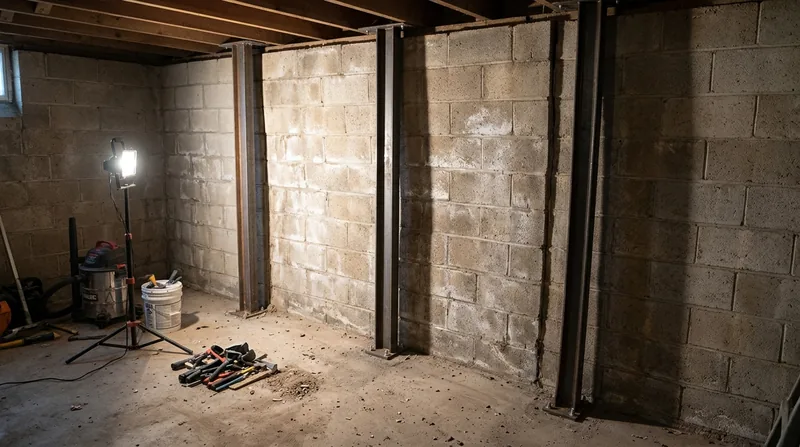




Bowing Wall Repair in Scranton: When Valley-Side Pressure Pushes Back
Scranton sits in a narrow valley between steep wooded ridges, and that geography shows up in the basement. The Hill Section and Green Ridge sit on grades that drain down toward older fieldstone and brick foundations, while the West Side, South Side, and North Scranton double-blocks sit on stone walls that have been taking glacial till and frost movement for a century. If you are searching for Bowing Wall Repair in Scranton, you are usually looking at a block or stone wall that has started to lean inward, often on the uphill side where saturated soil and winter frost push hardest.
This is not a cosmetic problem. A bowing wall is a structural symptom, and the fix is matched to how far the wall has moved, what the soil is doing, and whether water is still loading the wall from behind. We handle the below-grade side of that work: carbon fiber straps, steel I-beams, and wall anchors, plus the drainage corrections that keep the load from coming back. Start with a free basement inspection so we can measure the movement instead of guessing at it.
Why Bowing Walls Show Up So Often in the Lackawanna Valley
Most of the bowing walls we see in Scranton share the same setup: a block or stone foundation wall on the uphill side of a valley lot, backfilled with glacial clay soil that holds water instead of draining it. Add hard freeze-thaw cycles, heavy nor'easter snow, and spring snowmelt, and the wall spends years being pushed inward by hydrostatic pressure it was never designed to resist. Older anthracite mine workings beneath parts of the valley can also settle and shift, which cracks foundations and lets water in at the same time.
The failure modes we document most often on these walls include:
- Horizontal cracking in the middle third of a block wall, which is the classic sign of soil pressure rather than settlement.
- Vertical cracks at wall corners and along mortar joints in fieldstone foundations, often with efflorescence marking where water has been moving through.
- Inward lean at the top of the wall, where the floor joists are holding the top plate while the base pushes in.
- Stair-step cracking in block courses, which usually points to footing movement or mine-related settlement.
- White powdery staining and damp patches on the interior face, which tell you the wall is wet from the outside in.
If you see any of these, the wall is telling you the load has already exceeded what the original construction could handle, and the repair has to address both the wall and the water behind it.
Key info: A Green Ridge homeowner called us after noticing a horizontal crack at eye level in the block wall of a 1920s basement. The wall had moved about an inch over the previous two winters. The cause was a failed footing drain on the uphill side, not the block itself, and the repair combined carbon fiber straps with drainage correction.
For the code side of structural foundation work, the City of Scranton's licensing and inspections office is the authority to check before any repair begins. You can review the city's permitting resources at scrantonpa.gov, and we always confirm the current requirement with the local building department before we schedule work.
How We Stabilize a Bowing Wall on a Scranton Valley Lot
We do not start with a product. We start by measuring how far the wall has moved, in which direction, and how fast. On a valley-side basement in Dunmore or Taylor, that often means checking the wall against a plumb line, mapping crack widths, and looking at the footing drain and grade on the uphill side. The method we recommend depends on that data, the soil, and the wall construction, and we tell you plainly when a wall only needs monitoring and crack sealing rather than anchors.
Our process on a typical bowing wall job runs in this order:
- We inspect the interior face of the wall, the floor-wall joint, and the exterior grade to identify where water is loading the wall.
- We measure the deflection and document crack locations so the repair can be compared against a baseline later.
- We correct the drainage that caused the pressure, which may mean restoring the footing drain or regrading the uphill side.
- We install the selected stabilization system, either carbon fiber straps, steel I-beams, or wall anchors, based on severity and soil.
- We seal active cracks and verify the wall is no longer moving before we close out the job.
The sequence matters. Anchors or straps installed over a wall that is still being pushed by saturated clay will hold for a while, but the water has to be managed for the repair to last.
Key info: On a 1950s split-level in Clarks Summit, the uphill block wall had bowed about 1.5 inches. The soil was heavy glacial till that stayed wet well into spring. We installed steel I-beams on the interior and corrected the downspout and grade on the exterior, and the wall has held its line through two full freeze-thaw seasons.
When the inspection shows that water is the real driver, we often pair the stabilization with an interior drain tile system so the wall stops being loaded from behind. That combination is common on the older double-blocks in South Side and North Scranton.
Matching the Repair Method to the Wall and the Soil
There is no single fix for a bowing wall. A block wall that has moved a quarter inch in a dry, well-drained lot is a different job from a fieldstone wall that has been pushed by saturated clay for a decade. The table below shows how we match the approach to the condition we find.
| Approach | Description | Best for |
|---|---|---|
| Carbon fiber straps | Wide straps bonded to the interior face and anchored top and bottom to stop further inward movement. | Block walls with moderate bowing and no footing failure. |
| Steel I-beams | Vertical steel beams set against the wall and tied into the floor and joist system. | Walls with heavier movement or where soil pressure is high. |
| Wall anchors | Exterior anchor plates connected through the wall to interior plates that pull the wall back over time. | Walls that can be straightened and where exterior access is available. |
| Drainage correction | Restoring the footing drain or grade so hydrostatic pressure stops loading the wall. | Any bowing wall where water is the driving cause. |
| Crack injection and sealing | Epoxy or polyurethane injection into active cracks after the wall is stabilized. | Walls that have stopped moving but still leak. |
We choose the method after the inspection, not before, because the wrong system on the wrong wall wastes money and does not stop the movement.
Bowing Wall Repair Cost in Scranton: What to Expect
Homeowners ask us for a number before we have seen the wall, and the honest answer is that the range is wide. Stabilization work starts from $600 for limited crack and strap work, and rises with the length of wall involved, the severity of the bow, and whether drainage correction is part of the scope. A short strap job on a block wall is a different budget from a full anchor system on a fieldstone foundation in the Hill Section.
The factors that move the price most are the wall length and height, how far the wall has deflected, the soil and water conditions behind it, and access to the interior face. A finished basement with ceilings and framing in the way takes more labor than an open one. Mine-related settlement under the valley can also add scope, because the footing may need attention beyond the wall itself. That is why we recommend getting two or three estimates and comparing scope, not just the bottom line. Our full pricing overview explains how we build an estimate.
Bowing Wall Repair Near Me: How to Vet a Contractor Near Scranton
When you search for bowing wall repair near me, you will get a mix of dedicated waterproofing specialists, general foundation firms, and out-of-area companies that sub the work out. Ask each one the same questions and compare the answers. A contractor who cannot explain why your wall is moving, or who quotes a system before inspecting the drainage, is not the one to hire.
What to check before you sign:
- Confirm the contractor is licensed and insured for structural work in Pennsylvania, and ask for a certificate of insurance.
- Get at least two or three written estimates that describe the method, the materials, and the drainage scope separately.
- Ask for references from jobs in Scranton or the surrounding boroughs, and call them.
- Ask who pulls the permit, since structural foundation repair commonly requires one and the rules vary by jurisdiction.
- Get the warranty terms in writing, including whether it is transferable if you sell the home.
We are a Basement Health Association member, and we are happy to walk you through our insurance and references before you commit to anything. Reach out through our contact page to set up the inspection.
Key info: A homeowner in Old Forge had three quotes, two of which proposed anchors without checking the footing drain. The third measured the wall, found the drain was clogged with root material, and corrected it before strapping. The wall has stayed plumb since, and the homeowner avoided paying for anchors the wall did not need.
If your wall is moving, do not wait for the next spring thaw to look at it. Call (272) 770-2393 and we will get an inspection on the calendar.
Bowing Wall Repair in Scranton: Pricing Guide
| Service | Price | Details |
|---|---|---|
| Crack injection and localized strap work | Starting at $600 | Covers sealing active cracks and limited carbon fiber strapping on a short wall section. |
| Carbon fiber strap system | Starting at $1,800 | Includes straps across the bowed span, anchored top and bottom; price rises with wall length. |
| Steel I-beam stabilization | Starting at $3,200 | Includes beams tied into floor and joists; heavier movement and finished basements add cost. |
| Wall anchor system | On estimate | Requires exterior access and excavation, so we need an on-site look before quoting a number. |
| Drainage correction add-on | On estimate | Footing drain restoration or regrading priced after inspection confirms water is loading the wall. |
| Estimate | Free | Response within 24 hours at (272) 770-2393, no obligation to book the repair. |
Indicative pricing, the exact cost depends on square footage, finish, and site access. Free personalized estimate within 24h at (272) 770-2393.


