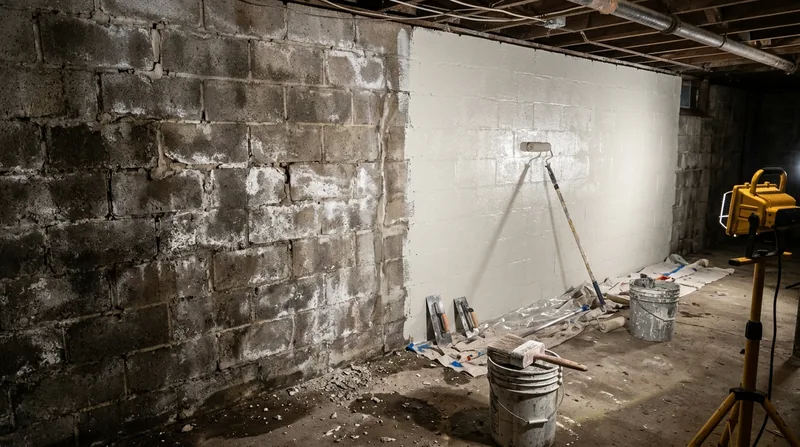




Basement Wall Sealing in Scranton: Stop the Damp Before It Spreads
Scranton sits in the Lackawanna River valley between steep wooded ridges, and that geography drives water straight into the foundations of the Hill Section and Green Ridge. If you own one of the 1870s to 1920s Victorians or Queen Annes on a fieldstone or brick foundation, you already know the pattern: white powdery streaks on the wall, a musty smell after a wet week, paint peeling off the block. Basement Wall Sealing in Scranton is the first line of defense against that surface dampness, and it is also the cheapest place to start before anyone talks you into excavation. We are a dedicated below-grade specialist, not a general foundation contractor and not a plumber. Call (272) 770-2393 to book a free basement inspection and find out which problem you actually have. If you want the broader picture of water management, start with our basement waterproofing service.
Why Basement Wall Sealing Matters in Scranton's Stone and Block Foundations
The building stock here is the reason. Fieldstone and brick foundations in the Hill Section and Green Ridge were laid by hand with lime mortar, and lime mortar is soft, porous, and never stops pulling groundwater. Frame double-blocks on the West Side and South Side sit on stone foundations that have been wicking moisture since the 1890s. Add hard freeze-thaw cycles, spring snowmelt off the ridges, and heavy nor'easter rain, and the wall stays wet from March through April. The dominant failure mode in Scranton is not a single gushing crack. It is chronic capillary seepage, efflorescence, and spalling parging.
- Efflorescence shows up as white salt bloom where water moves through the wall and evaporates on the face.
- Spalling parging and flaking paint tell you the wall face is saturated from behind, not just damp on the surface.
- A musty basement smell in Dunmore or Taylor usually tracks back to damp masonry, not to a single leak.
- Old anthracite mine workings under the valley settle unevenly and open hairline cracks that let water track in.
- Glacial clay soil over shale drains slowly, so the water table stays high against the footing after every storm.
Key info: A 1912 double-block on South Side had white bloom across the whole rear wall and a musty smell every April. The wall was damp but not leaking, so penetrating sealer plus grading and downspout extensions fixed it. A 1920s home in Old Forge with water pooling at the cove joint needed an interior perimeter drain, not sealer. Same symptom, different answer.
Before you spend a dollar, verify local requirements with the City of Scranton building department, because rules vary by jurisdiction and any work that alters drainage or the sanitary connection of a sump discharge can require a permit.
How We Seal Basement Walls in Scranton, Step by Step
We do not sell sealer as a cure-all. The first hour on site is diagnosis: we look at where the water enters, how high it climbs, and whether the wall is damp or actively weeping. Sealing a wall that is under hydrostatic pressure traps water behind the coating and makes spalling worse. That is why every job starts with a free inspection and an honest verdict.
- We inspect the wall, the cove joint, the window wells, and the grading, and we check the sump basin and discharge line.
- We remove efflorescence, loose parging, and failing paint so the sealer bonds to sound masonry, not to salt crust.
- We patch and repoint open mortar joints and hairline cracks with hydraulic cement before any coating goes on.
- We apply a penetrating sealer for damp masonry or a membrane coating where the wall needs a physical barrier.
- We correct grading and extend downspouts so roof water lands away from the foundation instead of against it.
Key info: A split-level in Clarks Summit had damp block walls and a failed sump pump after a July storm. Sealing the walls alone would have hidden the symptom. We sealed the walls and replaced the pump, and the basement stayed dry through the next snowmelt. For that scenario, see our sump pump installation page.
Sealing Methods We Use and When Each One Fits
Not every wall takes the same product. Fieldstone, brick, block, and poured concrete behave differently, and the method has to match the masonry and the water source. Here is how we choose.
| Approach | Description | Best for |
|---|---|---|
| Penetrating sealer | Sinks into the masonry and blocks capillary movement without trapping vapor. | Damp fieldstone and brick walls with efflorescence but no standing water. |
| Membrane coating | Builds a flexible physical barrier over sound, prepared masonry. | Block walls in Dunmore and Throop with surface seepage after rain. |
| Crack injection | Epoxy or polyurethane injection through ports seals active cracks. | Poured concrete walls in the Abingtons with a single leaking crack. |
| Interior drain tile | Perimeter drain and sump basin relieve water at the footing. | Walls under hydrostatic pressure where sealing alone fails. |
If the diagnosis points to pressure rather than surface damp, we recommend the system that actually solves it, and our interior drain tile system page explains that path.
Basement Wall Sealing Cost in Scranton: What to Expect
Most residential wall sealing jobs in Scranton start around $1,500, and that figure covers a typical single wall or a small basement with surface dampness. The price moves up with square footage, wall height, how much efflorescence and loose parging has to come off, and whether we are sealing one wall or the full perimeter. A fieldstone wall that needs repointing costs more than a clean block wall of the same size. Access matters too: a basement packed with stored belongings takes longer to prep than an empty one.
We quote after the inspection, not over the phone, because sealing the wrong wall wastes your money. Get two or three estimates and compare what is actually included, not just the bottom line. Our full pricing overview lays out the ranges in detail.
What to Look for When Hiring a Basement Wall Sealing Contractor Near Scranton
Basement wall sealing near me is a search that returns a lot of general handymen and a few real specialists. Ask three questions before you sign anything: are you licensed and insured for below-grade work, can you show references from Scranton or Dunmore, and will you tell me if sealing is the wrong fix. A contractor who only sells coatings will seal a pressure problem and disappear. We are a Basement Health Association member and we put the diagnosis in writing.
Confirm who pulls any permit, especially where work touches drainage or the sump discharge connection, and check with the local building department because thresholds vary. Ask for a certificate of insurance before work starts. Then book a free estimate through our contact page and get a straight answer about what your wall needs.
Basement Wall Sealing in Scranton: Pricing Guide
| Service | Price | Details |
|---|---|---|
| Single wall sealing | Starting at $1,500 | Includes efflorescence removal, crack patching, and one coat of sealer on a typical wall. |
| Full perimeter sealing | Starting at $2,800 | Covers all basement walls; price rises with square footage and amount of parging repair. |
| Fieldstone repointing and sealing | Starting at $3,200 | Adds mortar joint repair before sealing; older stone walls take more labor per foot. |
| Crack injection add-on | Starting at $450 | Epoxy or polyurethane injection for an active crack found during the sealing inspection. |
| Travel | Included | In Scranton and surrounding areas, no separate call-out or mileage fee. |
| Estimate | Free | Response within 24h at (272) 770-2393, no obligation to book. |
Indicative pricing, the exact cost depends on square footage, finish, and site access. Free personalized estimate within 24h at (272) 770-2393.


