What Tropical Storm Lee Taught Scranton Homeowners About Basement Flooding
In September 2011, Tropical Storm Lee dumped more than six inches of rain on northeastern Pennsylvania in a matter of hours. The Lackawanna River swelled beyond its banks, the Susquehanna crested at record levels downstream, and thousands of basements across Scranton filled with water, mud, and sewage. For many homeowners, it was the first time they truly understood that basement flooding is not just a riverfront problem. It is a groundwater problem, a storm sewer problem, and a foundation problem all at once.
The lessons from Lee are still relevant today. Heavy rain events are becoming more frequent, and the combination of river flooding and elevated groundwater tables puts every basement in the region at risk. If you live near the Lackawanna River, in the valleys around Dunmore, or on the higher ground toward Clarks Summit, the same forces that flooded homes in 2011 are still at work. The difference is whether your home is prepared.
River Flooding vs. High Groundwater: Two Different Threats
Homeowners often assume that if they are not in a designated floodplain, they are safe. Tropical Storm Lee proved otherwise. River flooding is visible and dramatic: the Lackawanna River or Susquehanna flood basement rises over its banks and spreads across low-lying neighborhoods. But high groundwater is the quieter threat. When the ground becomes saturated, water seeks the path of least resistance, and that path is often through the cove joint where your foundation meets the footing, through cracks in the wall, or up through a floor drain.
During Lee, many homeowners far from the river found several inches of clear water in their basements. That was not river water. It was groundwater rising under hydrostatic pressure. This distinction matters because the solutions are different. River flooding may require flood barriers and sump pumps sized for high volume, while high groundwater calls for Basement Waterproofing that manages pressure and redirects water away from the structure. A complete strategy addresses both.
Why Scranton Basements Are Especially Vulnerable
The geology and infrastructure of the Scranton area make basements particularly susceptible. Much of the city is built on steep slopes and filled valleys, which channel stormwater quickly toward low points. Older neighborhoods have combined storm and sanitary sewers that can back up during heavy rain, sending water into basements through floor drains and fixtures. Add in aging foundations, many of them stone or block, and you have a recipe for recurring Scranton basement flooding.
After Lee, many homeowners discovered that their existing sump pumps were undersized or had failed silently during the storm. Others found that their exterior grading sloped toward the house, directing surface water straight to the foundation. The storm exposed weaknesses that had been developing for years. If your home has never had a professional evaluation, you may be relying on outdated assumptions about how well your basement can handle a major rain event.
Flooded Basement Cleanup: What to Do First
If your basement floods, safety comes first. Do not enter standing water if there is any chance the power is still on or if the water may be contaminated with sewage. Once it is safe, document the damage with photos before you move anything, then call your insurance agent. Many standard homeowner policies do not cover groundwater flooding, but they may cover sudden water damage from a failed sump pump or burst pipe, so it is worth asking.
Cleanup should begin within 24 to 48 hours to prevent mold growth. Remove standing water with a wet/dry vacuum or a pump, then dry the space thoroughly with fans and dehumidifiers. Discard porous materials that cannot be dried, such as carpet, drywall, and insulation. Once the immediate mess is gone, the most important step is to address why the water came in. Without that, the next storm will bring the same result. A professional assessment can identify whether you need an Interior Drain Tile System, exterior drainage improvements, or both.
Flood Prevention: Building a Basement That Can Handle the Next Big Storm
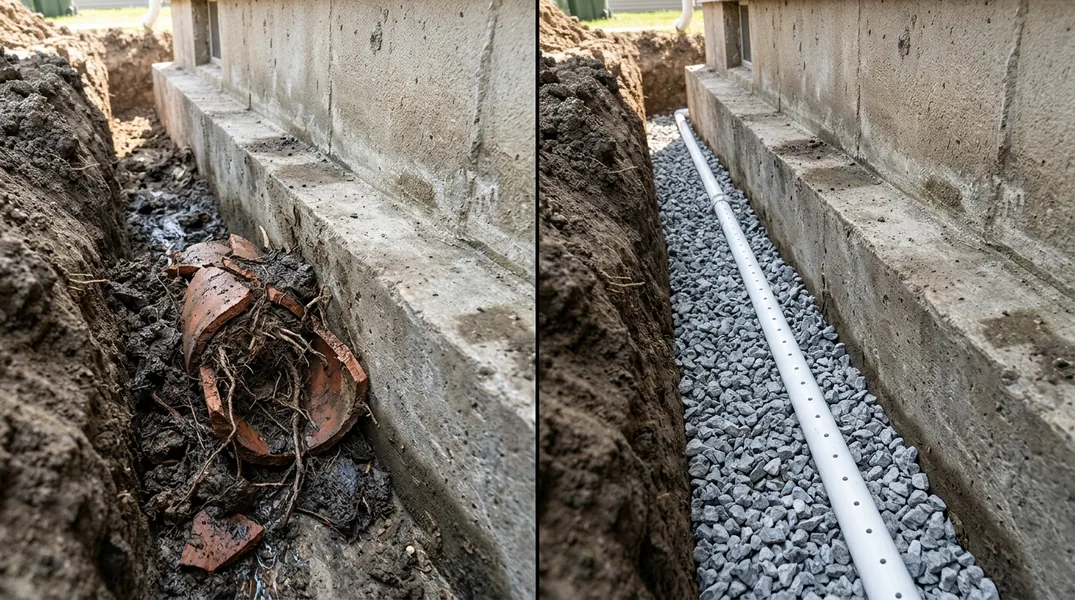
Effective flood prevention is layered. Start with the outside: ensure gutters are clean and downspouts discharge at least six feet from the foundation, and regrade the soil so it slopes away from the house. These simple steps reduce the volume of water that reaches your foundation. Next, consider Exterior Basement Waterproofing, which involves excavating around the foundation to apply a waterproof membrane and install drainage that carries water away before it can enter.
On the inside, an Interior Drain Tile System captures water that rises under the floor and channels it to a sump pump. A battery backup system is essential, because storms that cause flooding often also cause power outages. Finally, Foundation Waterproofing addresses cracks and the cove joint directly, sealing the most common entry points. Together, these measures create a basement that can handle both river flooding and high groundwater.
Basement Waterproofing Near Me: When to Call a Pro in Scranton
Some homeowners can manage minor dampness with a dehumidifier and better grading. But if you have seen standing water, noticed efflorescence (the white powder on basement walls), or smelled mustiness after rain, it is time for a professional evaluation. These are signs that water is already finding its way in, and the problem will not fix itself. In fact, it usually gets worse as foundations age and weather patterns intensify.
Scranton Waterproofing serves homeowners throughout the region, including Clarks Green and surrounding communities. We start with a thorough inspection to identify the source of the water and recommend a solution tailored to your home, not a one-size-fits-all package. If you would like to understand pricing before you commit, we are happy to walk you through the options. Call (272) 770-2393 or request a free estimate today. The next storm is not a matter of if, but when.
Looking for a professional basement waterproofing contractor in Scranton? Scranton Waterproofing responds fast for all your basement waterproofing needs.
Get a Free QuoteOur services: Basement Waterproofing · Interior Drain Tile System · Exterior Basement Waterproofing