Why Scranton's Steep Valley Lots Are Hard on Basements
If you live in Scranton, you already know that flat lots are the exception, not the rule. The city is built into the Lackawanna Valley, and many homes sit on hillsides where the backyard is significantly higher than the front. That topography is beautiful, but it creates a specific kind of pressure on your foundation that flat-lot homeowners rarely deal with. When your house is cut into a slope, the soil uphill from your foundation is constantly draining water toward your basement walls, not away from them.
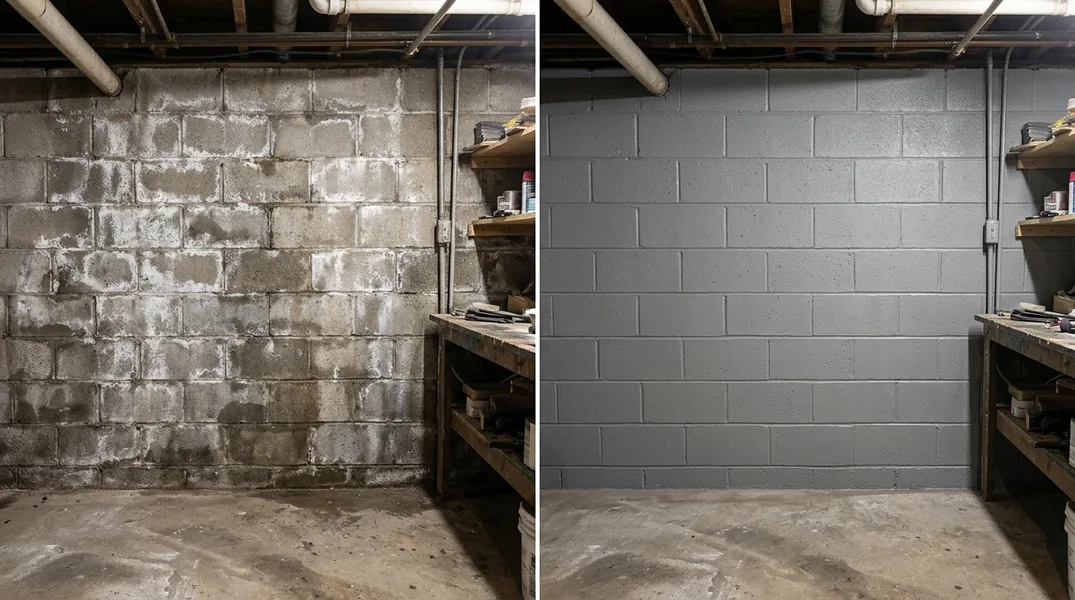
This is what contractors call an uphill foundation wall, and it is the source of a huge share of the Basement Waterproofing work we do around here. The uphill wall acts like a retaining wall for the entire hillside above it. Every rainstorm and every spring thaw sends water through the soil, and that water pools against the back or side of your foundation. Over time, even a well-built wall will let some of it through. If you have noticed dampness, efflorescence (that white chalky powder), or actual standing water on the uphill side of your basement, the slope is almost certainly the culprit.
The Snowmelt Problem: When Spring Thaw Hits Lackawanna County
Lackawanna County gets a real winter, and that means a real snowpack. When that snow finally melts in March and April, the ground is often still frozen a few inches down. Meltwater cannot soak into frozen soil, so it runs across the surface and through the top layer of mud until it finds the path of least resistance. On a hillside lot, that path frequently leads straight to your foundation. This is the classic hillside snowmelt basement scenario: a dry basement all winter, then a wet one the first week the temperature climbs above freezing.
What makes it worse is that the melt happens fast. A few warm days with rain on top of melting snow can push thousands of gallons of water against your uphill wall in a single afternoon. If your gutters are clogged with ice dams or your downspouts dump water right next to the house, you are essentially funneling that meltwater into the exact spot you least want it. Homeowners across the region deal with Dunmore and Clarks Summit call us every spring with the same story, and the fix almost always starts with managing where that meltwater goes.
Basement Drainage: The First Line of Defense on a Hillside
Before anyone talks about sealing walls or installing systems, the conversation has to start with basement drainage. On a sloped lot, the goal is to intercept water before it reaches the foundation and to give it somewhere to go once it does. That means looking at the whole picture: grading, gutters, downspout discharge, surface swales, and the drainage system at the base of your foundation. A common fix is extending downspouts well away from the uphill side of the house and regrading the soil so it slopes away from the wall rather than toward it. Sometimes a shallow swale or french drain uphill of the foundation can divert surface water around the house entirely.
When surface strategies are not enough, an Interior Drain Tile System gives water that does get in a controlled path to a sump pump instead of letting it spread across your floor. For hillside homes, we often pair interior drainage with exterior work on the uphill side, because that wall takes the brunt of the pressure. The right combination depends on your specific slope, soil, and how the water is actually entering. A proper assessment matters more than any single product, which is why we always recommend a free estimate before committing to a plan.
Exterior Basement Waterproofing for Uphill Foundation Walls
The uphill wall is where Exterior Basement Waterproofing earns its keep. Exterior work involves excavating down to the footing on the pressure side, applying a waterproof membrane to the wall, and installing drainage that carries water away before it ever touches the foundation. On a steep lot, this is often the only way to truly relieve the hydrostatic pressure that builds up against that back wall. It is more involved than interior work, but for homes with serious uphill water problems, it addresses the source rather than just managing the symptoms.
Exterior waterproofing also gives us a chance to fix the grading and drainage at the same time, which is a big part of Foundation Waterproofing. We can correct the slope of the soil, install proper footing drains, and make sure the water has a clear route away from the house. For homeowners in Clarks Green and similar hillside neighborhoods, this combination is often what finally ends the annual spring flooding ritual. It is not always the cheapest option up front, but it is frequently the most durable one for a valley lot.
Basement Waterproofing Near Me: When to Call a Pro in Scranton
Some basement moisture is a DIY fix: a clogged gutter, a downspout that ends two feet from the foundation, a small grade issue. But if you are seeing water on the uphill side of your basement after every snowmelt, if the wall is bowing or cracking, or if you have already tried sealing the inside and the problem keeps coming back, it is time to call a professional. Those are signs that the water is coming from outside pressure, and no amount of interior paint or sealer will stop it. The longer you wait, the more chance that pressure has to damage the wall itself.
If you are searching for basement waterproofing near me in the Scranton area, look for a contractor who understands hillside lots specifically. A flat-lot playbook will not cut it when your house is built into a slope. Scranton Waterproofing has worked on these valley properties for years, and we can tell you quickly whether you are dealing with a drainage issue, a wall issue, or both. Call us at (272) 770-2393 to talk through what you are seeing, or reach out for a free estimate and we will take a look at your lot, your walls, and your drainage together.
Basement Waterproofing Cost in Scranton: What to Budget
Homeowners ask about pricing early, and that is fair. The honest answer is that cost depends heavily on your lot. A simple interior drain tile and sump installation on a mild slope is one budget, while full exterior excavation on a steep uphill wall is another. Factors that move the number include the length of the uphill wall, how deep the footing sits, whether the grade needs correction, and whether you need both interior and exterior work. We do not believe in one-size-fits-all packages, because a hillside home in the valley rarely fits a standard template.
What we can tell you is that fixing the problem correctly the first time is almost always cheaper than repairing a failed wall or a finished basement later. Water damage compounds: cracks widen, mold moves in, and framing rots. When you get a quote from us, you will get a clear explanation of what is causing your leak and what each option does about it. We will walk you through the pricing line by line so you can make a decision that fits your home and your budget, not a sales script.
Looking for a professional basement waterproofing contractor in Scranton? Scranton Waterproofing responds fast for all your basement waterproofing needs.
Get a Free QuoteOur services: Basement Waterproofing · Interior Drain Tile System · Exterior Basement Waterproofing